
28 Jun 2026
Football must prevail over Donald Trump, by Xavier Bosch
The article criticizes FIFA's management and unequal treatment of national teams in the World Cup, focusing on the situation of Iran and referee Omar Artan.
The match between England and Panama at the 2026 World Cup seen through the tactics of the Central American team.
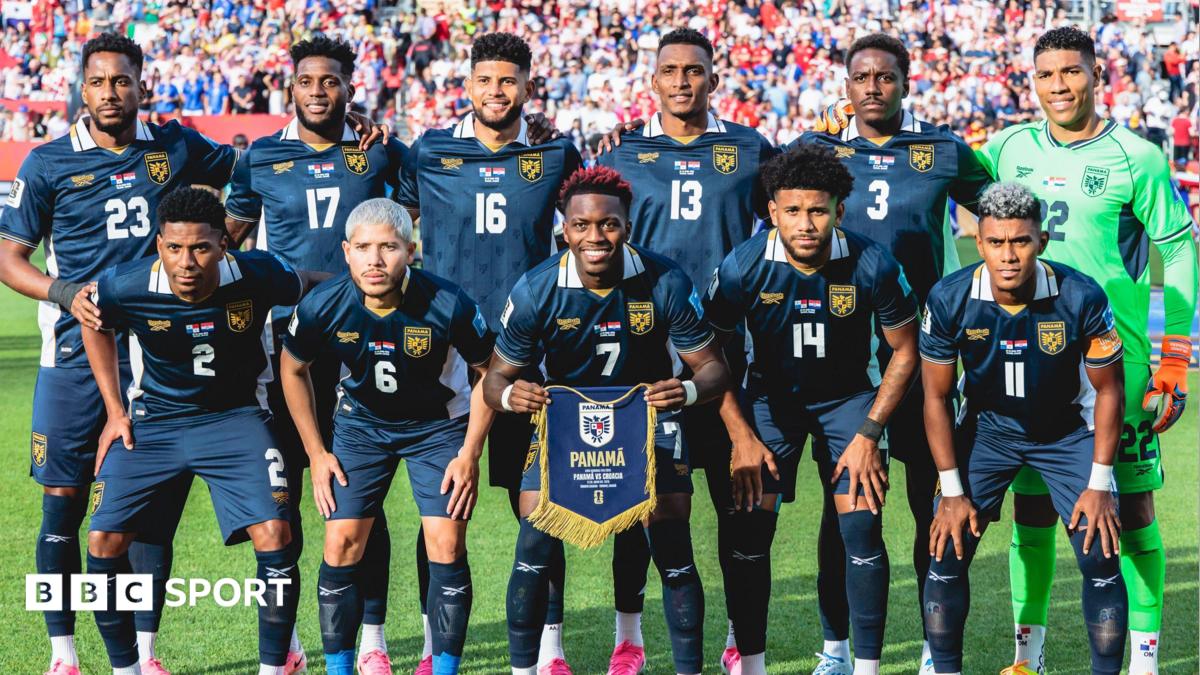
With four points from two matches, England hope to secure top spot in their 2026 World Cup group with a win against Panama on Saturday. The Central American team is relatively unknown, but it is an interesting team whose performances have not been adequately represented by the results obtained so far in the tournament. Against Ghana and Croatia, there were moments when Panama appeared to be the best team on the pitch, but struggled to translate good play into goals, especially in the absence of what is considered their best player, Adalberto Carrasquilla, injured. How will Panama position itself tactically and how will England be able to put the Panamanians in difficulty? Panama adopted a dynamic approach in the first two matches, varying their lineup depending on the phase of the game. On their opponents' clearances from the back, the Central American team raises their center of gravity and forms a very aggressive 4-4-2. If the opponents manage to overcome the pressure and arrive with quality in their half of the pitch, then they switch to a sort of mid-block, changing formation to 5-3-2. The objective becomes to make it difficult for the opponents to play centrally. With Croatia, in particular, taking control of the game, Panama moved their center of gravity further back, switching to a five-man defense and maintaining a lower defensive line. However, this defensive approach presents some unknowns for Gareth Southgate's team. England is a team that loves to face opponents who raise their center of gravity, as happened in the match against Japan. Conversely, if the opposing team defends low, it is more difficult for English attackers to find scoring opportunities. Interestingly, despite Panama's greater defensive centralization, opposing teams still manage to find space on the flanks. This is because, by adopting a 5-4-1 in the defensive phase, Panama is unable to adequately cover the entire length of the pitch, unlike Ghana, who instead managed to better protect the center with a 4-5-1 formation. Indeed, it seems that Thomas Christiansen's team prefers to concede crosses rather than concede scoring opportunities centrally. In fact, Croatia scored the only goal against Panama with a cross, while England recorded six assists from crosses in the match against Japan. Another interesting aspect is how Panama reacts to the loss of ball possession. The Central American players are very good at trying to regain possession, but only in the opponent's backcourt. If the ball is lost in other areas of the pitch, they tend to be more relaxed in their recoveries. This could therefore be another aspect to take into consideration for England: trying to make quick plays to surprise Panama's defence, perhaps serving Harry Kane, who is very good at receiving the ball with his back to the goal, to then have it restart quickly, looking above all for the flanks. Finally, one wonders how motivated Panama will be in this match, given that they no longer have a chance of going through, regardless of the outcome of the match against England.
The article criticizes FIFA's management and unequal treatment of national teams in the World Cup, focusing on the situation of Iran and referee Omar Artan.

Paolo De Paola discusses the future of Juventus and Carnevali's role as new CEO, highlighting the importance of a dual role for the club's success.
Roma is working to renew the contracts of some players, including Dybala, who requests a higher salary than the club's current offer.