1 July 2004, Greece beat the Czech Republic in Porto with Dellas' silver goal
On 1 July 2004, Greece surprised the Czech Republic in the semi-final of the European Championship, winning thanks to a goal by Dellas during the first extra half.
Share
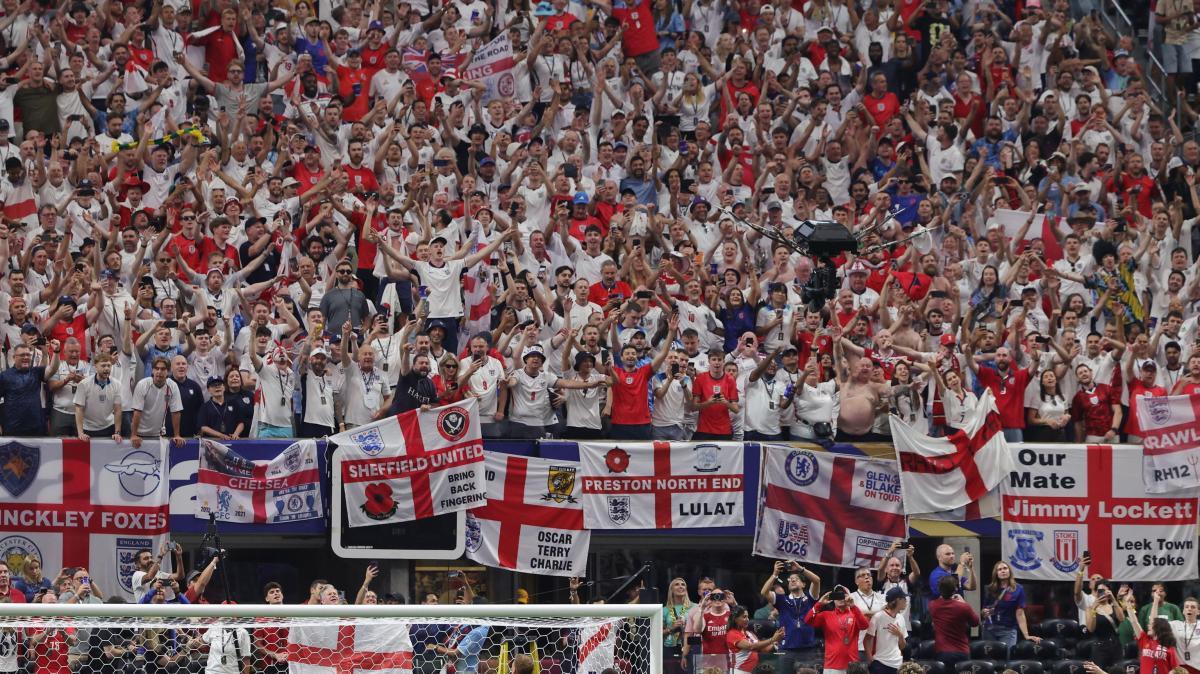
From the Beatles to 'You'll never walk alone', an almost religious relationship between music and football (ANSA) - ROME, 04 JUL - The contagious energy of Jude Bellingham, the wink of Declan Rice while his gaze shines, the intimate composure of Captain Harry Kane. Three snapshots of a collective ritual in music, consolidated match after match in these World Cups: England all embraced, looking into each other's eyes - the team on the pitch and in front of them a wonderful wall of fans in the stands - and singing Wonderwall in unison. Already a multi-generational anthem, Oasis' timeless masterpiece has found yet another life in American stadiums, in an attempt to exorcise a sixty-year curse and to become, perhaps, 'the one that saves me'. In this case, the salvation of a national team that has not won the World Cup since 1966 and can no longer wait. The verses of the Gallagher brothers, however, are anything but a new element in the relationship that has linked English football to music for over a century. A relationship that has something religious about it, in which the words sung by the fans transcend the pitch and speak of journeys and storms, of failures and hopes. In short, all-round life. It has been like this since at least the 1920s, when on the eastern outskirts of London a song that arrived from the other side of the Atlantic and was also made famous across the Channel by covers - a common thread in this story - began to be sung before the local team's matches, after having been cleared through customs in the local school. The team is West Ham, the notes are those of I'm forever blowing bubbles: a short, very simple text, in which through the metaphor of soap bubbles - which fly until they touch the sky and then, inevitably, fall (just 'like my dreams') - you are urged to continue blowing and always making new ones, whatever the result. Forty years later, the 1960s began and a new cultural capital was born on the shores of Merseyside. The young people of Liverpool take advantage of the arrival in the city port of records from the United States to expand their repertoire, while at Anfield before the matches the loudspeaker plays the songs currently in the top ten of the charts, but the favorites from the curve are also sung during the match in progress. Among these is the first big success of a local band, the Beatles; There are still videos online. A stream of unthinkable people sing 'She loves you' in the Kop, amidst joyful swings and movements that today would make any security manager shudder. But there is a cover of a Stars and Stripes hit that Reds fans are obsessed with: as soon as it leaves the top ten they start a problem, because those words have entered their hearts. Performed by the local group Gerry and the Pacemakers, the song is 'You'll never walk alone'. A universal song that can accompany every moment of life, remembering that at the end of every storm there is a golden sky, that we must move forward because, as long as there is hope, we never walk alone. A song that has become an anthem not only of Liverpool but of various clubs around the world, and now a symbol of football. Over the years there have been many traditions that have consolidated, then, in individual teams, or the reinterpreted verses that have given life to new chants - 'Giggs, Giggs will tear you apart', United fans sang to their opponents, distorting the immortal words of their fellow citizen, Ian Curtis, for whom, however, it was love, not the Welsh left-footer, that destroyed you. Wonderwall is the last stage of this centuries-old plot, which has changed its customs a bit over time. It was the English federation who chose it for the playlist at the end of the matches, banking on a success that has already been global for decades: a choice made from above rather than born from below, perhaps a sign of the times. But even if the hooligans are no longer there, the magic that came from the union between football and music remains the same. An element of unity like no other thanks to which an entire nation dreams of breaking a spell, bringing 'home' that cup that has turned into a nightmare over the years. (HANDLE).