The transformation of African football at the World Cup has been extraordinary. At the 2018 World Cup in Russia, none of the five African teams made it past the group stage, recording just three wins from 15 matches. Moving on to the 2026 World Cup, Africa is now seen as a successful example of Gianni Infantino's expansion project. Of the 10 African teams, all but one made it past the group stage. Only Tunisia failed to progress, while Cape Verde, Egypt, Ivory Coast, Morocco and South Africa came in second, and Algeria, the Democratic Republic of Congo, Ghana and Senegal came in third. It's a very different story for Asia, with only two of its nine nations making it past the group stage. For Africa it is a cause for celebration, while Asia is left to reflect on its own difficulties.
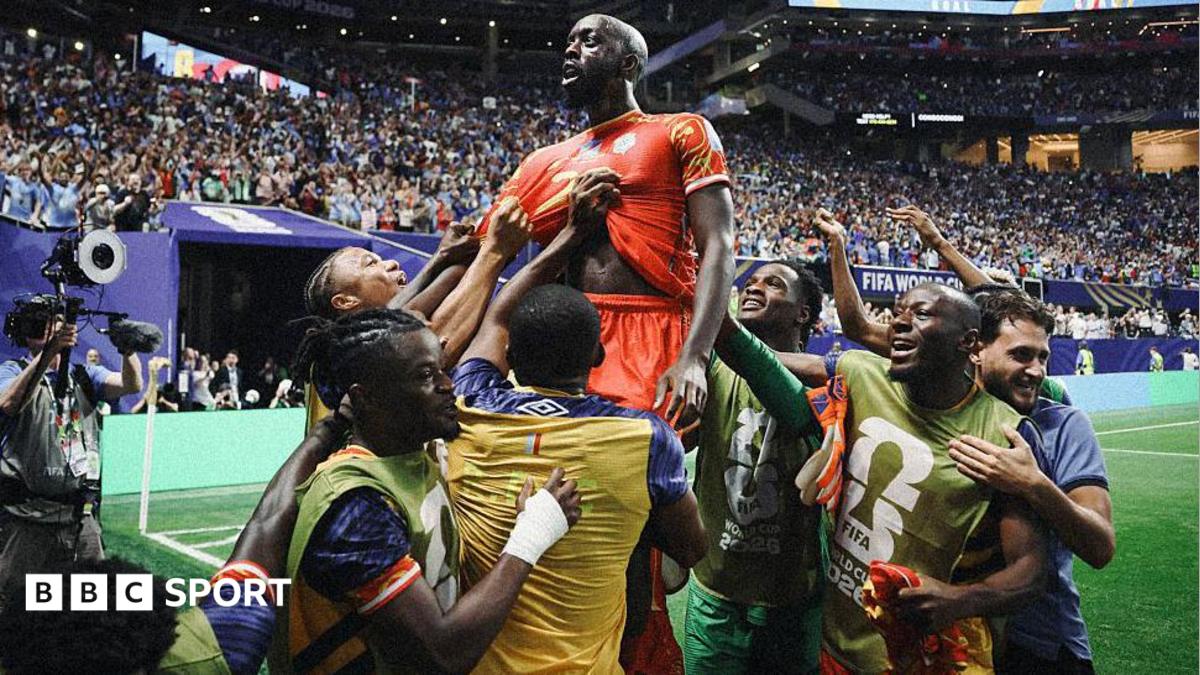
Infantino's restructuring of the World Cup had been approved well before 2018. When Africa performed so poorly in Russia, the justifications for giving the continent four more places seemed weak. Eight years later, those concerns have completely vanished. This is an incredible turnaround, partly inspired by the long-term commitment of the Moroccan Football Federation. Confederation of African Football (Caf) president Patrice Motsepe attributes the success to "hard work and investment in youth football development, training and professional leagues" across the continent.
The first signs of improvement emerged in Qatar four years ago, when two African nations reached the round of 16 for the first time. Before the 2022 World Cup, only three African teams had reached the quarter-finals: Cameroon in 1990, Senegal in 2002 and Ghana in 2010. Morocco achieved what no other African country had managed, reaching the semi-finals by beating Belgium, Spain and Portugal, before France halted their progress. If Morocco managed to create a structure that brought clear and lasting results, why couldn't other African nations do the same? “Morocco has created a model of how it can be done, investing in youth football and academies for years,” former Nigeria captain William Troost-Ekong told BBC Sport Africa this month. "Morocco has invested not only money, but also time and effort, with a clear idea of how to progress. The structures they have, the coherence between their age groups, I think is the only model to follow. The new format of the World Cup has helped, but that doesn't explain why Africa has done so well and Asia so badly. In the last World Cup, two of the 16 strongest teams were in each group. Now those 16 teams are spread across 12 groups, which means only four groups have two of the traditional strongest nations. These numbers alone suggest that the third-placed teams also advanced, leading to a first-round knockout with 32 teams, as many as in the group stage in Qatar. How far can the African representatives go this year? Morocco enters on the pitch as African champions, although only after Caf annulled the result of the Africa Cup of Nations following Senegal's controversial exit. Ten years ago, Morocco would have been given little chance of beating the Netherlands, but today no one would bet against them. Indeed, it can be argued that the North Africans should be considered favourites. After all, they are now sixth in the FIFA rankings, one place above the Netherlands. With the top four ranked nations - Argentina, England, France and Spain - kept separate in the draw, it becomes more difficult to emulate Morocco and reach the last four. Indeed, Morocco is on a collision course with France in a potential quarter-final. Reigning champions Argentina, who face Cape Verde on Friday, have four African teams in their section of the draw and could potentially face one in each round towards the semi-finals If the expanded format of the World Cup has proved to be an opportunity for Africa, the opposite is true for Asia. Out of 27 matches played, the nine Asian representatives have achieved only three victories at 0.67 points per match, there have been five matches crucial for qualification won none of them, losing four. Four years ago, Australia, Japan and South Korea had reached the first knockout round. This time, only Australia and Japan have grown and improved - five have qualified for the knockout stage for the first time - Asia has fallen back. that his team lost all three matches. The consequences of South Korea's failure, ultimately caused by a shock defeat against South Africa, were enormous. South Korea's president, Lee Jae Myung, called for an investigation into the team's poor performances, calling them "an organizational and personnel failure." matches, scoring three goals and conceding eight. Jamal Sellami, Jordan's coach, explained the big gap in performances. "Because African players compete in the main European leagues," said Sellami. "The most important thing for Jordanian football, if it wants to have a better chance of achieving results, is to have players competing in stronger and more competitive leagues." of these in the top five leagues. The Democratic Republic of Congo, the last African nation to qualify through the inter-confederation playoffs, has 24 players in Europe - although only 11 in a major league. Only Egypt has a small number, with 17 players in their domestic league and six in a European team. For Jordan, striker Musa Al-Taamari is the only player in Europe, in French club Rennes three players in Europe, and Iran has four. This shows the gap in development that needs to be filled. The Asian confederation has a lot of work to do to try to catch up to Africa and prove that its teams can compete in this expanded format.

