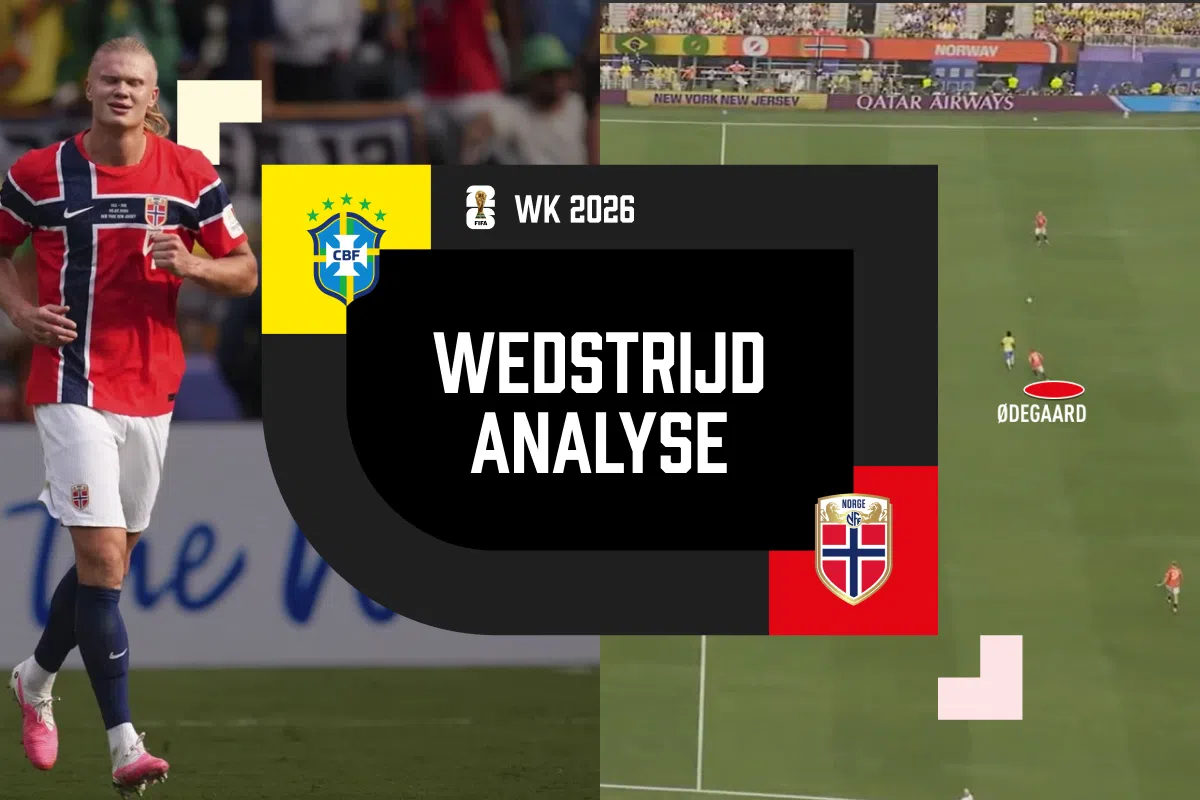
Analysis: the tactical game behind Norway's success
Why it matters
Norway's victory against Brazil marks a significant moment in international football, highlighting the effectiveness of Stale Solbakken's tactical plan. The choice to position Erling Haaland as a wing forward demonstrated how Norway can compete at the highest level, defying the expectations of a historically dominant team like Brazil. This could have positive repercussions for Norway ahead of the 2026 World Cup, where the team will try to further establish itself.
Context
Erling Haaland, Norway's top striker, demonstrated his versatility by playing in a more wide position, using his speed to create chances and support the defence. His performance, along with that of Martin Ødegaard, highlighted Norway's potential on the international football scene, especially ahead of the 2026 World Cup.
Key points
- Analysis: the tactical play behind Norway's success.
- Norway tactician Stale Solbakken surprised everyone with his choices in the match won against Brazil.
- Analyse: het tactische schaakspel achter het succes van Noorwegen ontleed.
Brazil left the World Cup with a negative record of ball possession. The country, which in the past had stood out for its beautiful play, demonstrated in the round of 16 match against Norway that it knows how to defend and strike on the counterattack. "How did Brazil manage to defend for ninety minutes against Norway?" asked Vanderlei Luxemburgo. "Brazil played with fear." This harsh judgment towards Brazil does not do justice to Norway. Carlo Ancelotti and Vinícius Júnior revealed that Norway's aim was not to let their opponents play at all. Thanks to a clever move by Stale Solbakken and the runs of Martin Ødegaard, Brazil were left in a position where they could not express their game. The Norwegian coach has decided to play Erling Haaland no longer as a central striker, but as a left wing forward. In this way, Haaland could use his speed to attack the opposition defense, but at the same time, when Brazil attacked, he positioned himself on the wing to help the defenders. This created quite a few problems for the Brazilian rearguard, who found it difficult to mark such a fast player. Solbakken's choice also forced Martin Ødegaard to change his way of playing. The Norway captain, who plays for Arsenal, where he is considered a playmaker, now had to give up much of his creativity to position himself more centrally and try to occupy the spaces vacated by Haaland. This choice paid off, as Ødegaard was the author of a goal and an assist in the match against Brazil. His ability to enter spaces was fundamental to Norway's game plan, which relied entirely on very fast counterattacks. It was precisely on a restart that Norway scored the first goal of the match: after an attack attempt by Brazil, Norway managed to recover the ball and launched Martin Ødegaard into the attack, who, after passing the opposing goalkeeper, put the ball in the net. The second Norwegian goal also came thanks to a lightning-fast counterattack: this time it was Erling Haaland's replacement, Alexander Sørloth, who scored, finalizing a quick counterattack by the Scandinavian team. It is clear that Norway, contrary to what they think in Brazil, did not want to leave possession of the ball to their opponents at all, but relied entirely on their speed to hit. The Brazilian defense, however, was also put to the test by the intelligent movements of Ødegaard, who often spread wide on the left, just like a winger would, before returning and appearing in the opponent's penalty area. This move created quite a few problems for the Brazilian defenders, who found it difficult to mark such an unpredictable player. In short, the 2-0 with which Norway beat Brazil in the round of 16 of the World Cup is the result of a well-thought-out match plan and great tactical intelligence implemented by Norwegian coach Stale Solbakken.
What happens now
With Norway having shown a winning strategy, Stale Solbakken is expected to continue developing his tactical approach ahead of the upcoming competitions. Martin Ødegaard's performance and Erling Haaland's versatility could become key elements for the team's future. Furthermore, Norway could attract the attention of other coaches and analysts, influencing the way opposing teams prepare their games.
Frequently Asked Questions
What happened in the match between Norway and Brazil?
Norway defeated Brazil, demonstrating effective defensive play and hitting on the counterattack.
Who confirmed Norway's strategies?
Carlo Ancelotti and Vinícius Júnior revealed that Norway did not want to leave room for Brazil to play.
Why did Norway change Erling Haaland's role?
Norwegian coach Stale Solbakken decided to play Haaland as a left wing forward to take advantage of his speed and help in defense.
What changes did Martin Ødegaard have to make?
Martin Ødegaard had to give up his creativity to position himself more centrally and occupy the spaces vacated by Haaland.
What results did Martin Ødegaard achieve in the match against Brazil?
Martin Ødegaard scored a goal and provided an assist in the match against Brazil.
Related Articles
- Neymar will miss Brazil's debut at the World Cup, confirms Ancelotti
- Mundial 2026
- Embolo scores Switzerland's first goal at the 2026 World Cup
- Good news for Scotland: McTominay has recovered and will play against Haiti
- How to follow the World Cup without spoilers?